如果直接碾米,不仅会浪费时间,降低产量,产生更多碎米,减少稻米产量,而且成品色泽差、米粒多、纯度低、质量差。同时,稻壳含有大量粗纤维,必须去除。因此,在米厂中,清洗除杂后,去除稻壳得到糙米,然后进行碾米。
In the process of rice processing, the process of removing the rice husk of rice is called hulling, and the machine that helps the rice to remove husk is called the rice hulling machinery. The various types of rice hulling machines currently used are limited by mechanical and technological performance, and it is impossible to hull all the rice at one time. Therefore, after hulling, there is not all brown rice, also have paddy, rice husks, and broken rice. The separation refers to separate the paddy, rice husks, and brown rice. The brown rice is extracted for 碾米. The unhusked rice is returned to the hulling machine for hulling again. Some by-products can be separated according to their properties and application, and make reasonable use. The effect of hulling can directly subsequent processes, and can also affect the quality, output, yield, and cost of the finished product. Therefore, it is required to protect the integrity of paddy as much as possible when hulling, reducing the breakage and bursting of rice grains, to improve the rice yield; try to avoid damage to the smooth surface of brown rice, to improve the effect of grain separation. Maintaining a high and stable hulling rate can increase the output of the hulling machine. It is necessary to save power, reduce material consumption, and reduce production costs.
稻壳去除
稻壳去除是通过在稻壳机上施加一定机械力,根据稻谷结构的特性实现的。根据施力方式和去壳方式,稻壳方法大致可分为三类:挤压摩擦、端面压力摩擦和撕裂冲击。
1. 挤压摩擦,是指用两个运动速度不同的工作面挤压和摩擦稻谷的两侧,以去除稻壳。设备主要包括橡胶辊去壳机和辊带去壳机。
2. 端面压力摩擦和撕裂去壳,是指用两个长度方向上的稻谷两端被挤压、摩擦和撕裂的方法,两个工作面以不同速度运动。所用设备主要是砂板去壳机。
3. 影响壳的去除指的是高速移动的稻谷与固定工作面碰撞以去除稻壳的方法。设备主要包括离心去壳机。
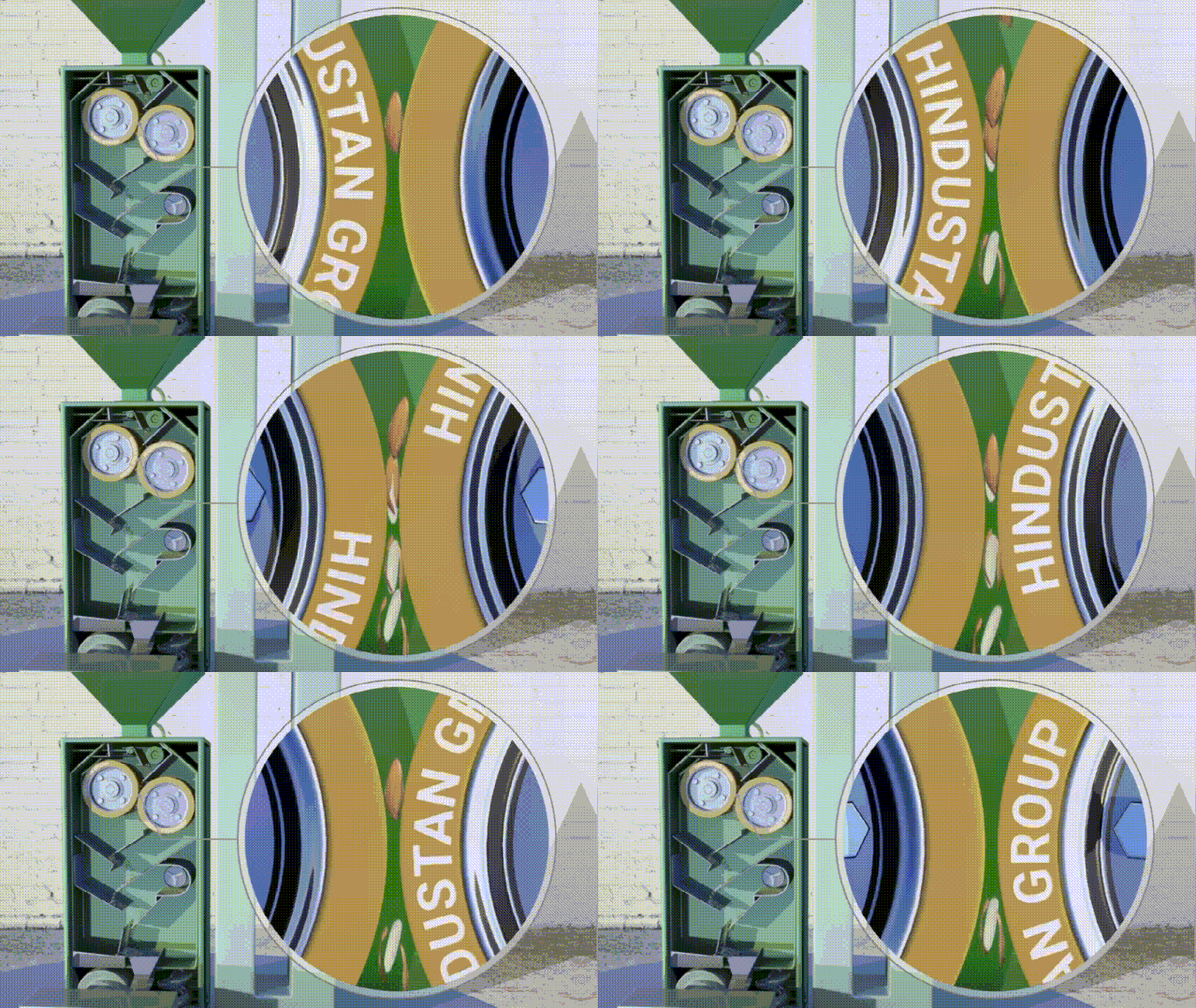
稻壳分离
从稻谷中去除的稻壳也称为大壳。由于稻壳比重小、体积小、流动性差,如果不及时在去壳后分离,会影响后续工序的效果或正常生产。例如,在稻壳分离中,如果混入大量稻壳,必然影响稻壳混合物的流动性,使其无法形成自动分类,从而降低分离效果。如果在返回去壳机时混入过多稻壳,去壳机的产量会降低,且会消耗更多动力。因此,稻壳分离工序必须在去壳工序后立即进行。
稻壳的分离利用其物理性质的差异,将它们彼此分开。
稻壳的悬浮速度与稻谷和糙米的悬浮速度差异很大,因此,扬谷是帮助分离稻壳的最佳方法。此外,还可以利用稻壳在相对密度、堆积密度、摩擦系数等方面的巨大差异,这更有利于提高扬谷分离效果和降低能耗。通常在去壳机的下部安装稻壳分离装置。扬谷后分离出的稻壳需要回收利用,这是稻谷加工的重要步骤。所有稻壳都需收集存储、运输和综合利用,排放的空气必须符合规定的粉尘标准,以免污染空气和影响环境卫生。常用的稻壳收集方法有重力沉降和离心沉降。
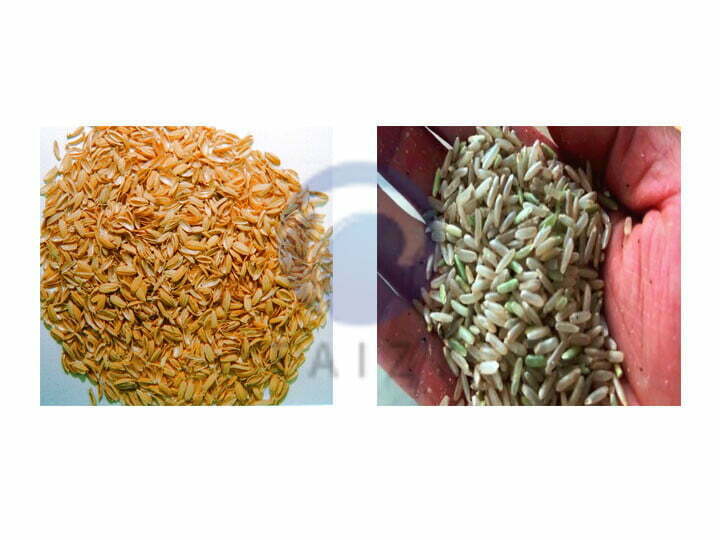
稻谷与糙米的分离
稻壳分离后,剩余的糙米混合物必须在碾米前进行分离。未壳稻谷与糙米的分离称为糙米分离。纯糙米分离后进行碾米,分离出的稻谷返回去壳机进行壳碎。
稻谷与糙米的分离基于其物理性质如堆积密度、粒径、摩擦系数、悬浮速度、相对密度和弹性等的差异,以及在运动中的稻谷与糙米混合物的自动分类,即稻谷浮起,糙米下沉。采用适当的机械运动形式和装置进行分离和分类。目前,米厂广泛使用两种谷物分离设备:重力谷物分离器和谷物筛选平转筛。
分离后分离出的糙米必须不含稻谷(某些指标要求糙米每千克不超过40粒)。如果糙米中含有过多稻谷,会影响碾米效果,降低成品米的质量。可以看出,稻谷与糙米的分离是米加工中不可或缺的工序,且工艺要求非常高。